Learn where facelift incisions are commonly placed, how scars change over time and which surgical and patient-related factors influence how discreetly they heal.
Fillers, threads and energy-based treatments can address selected concerns, but they cannot reproduce structural surgery. Learn when repeated non-surgical treatment may no longer match the anatomy.
Swelling, bruising, tightness and temporary sensory changes are expected after a Deep Plane Facelift. Learn how they usually evolve and which warning signs require urgent review.
Most patients need several weeks before feeling socially presentable after a facelift. Learn how work, events, travel, make-up and exercise fit into a realistic recovery plan.
The lower face and neck form one visual and anatomical unit. Learn why evaluating them together can improve jawline balance and help avoid an incomplete or mismatched result.
Natural-looking facelift results come from individual analysis, deeper tissue support, balanced vectors and restraint—not from simply tightening the skin or erasing every sign of age.
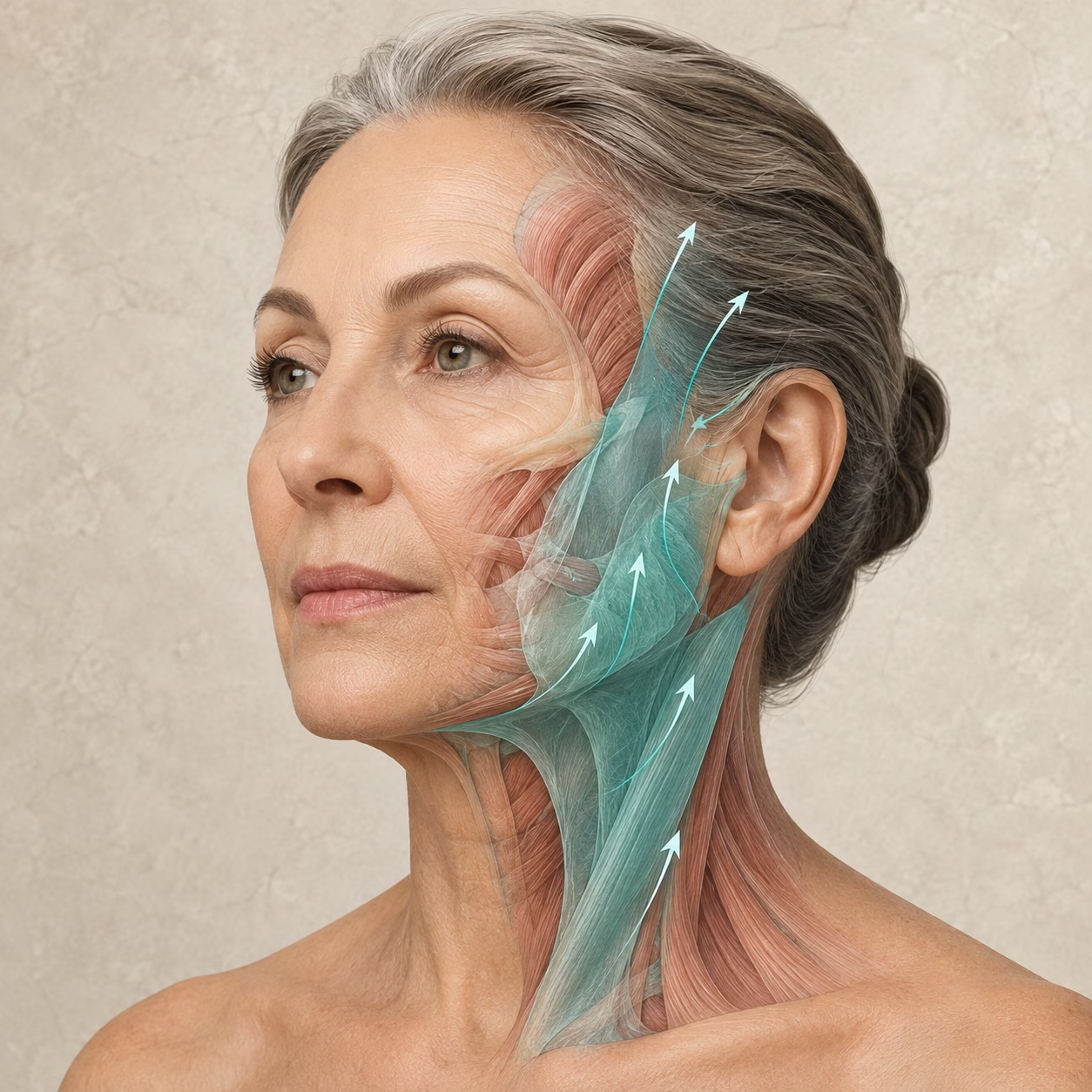
Discover how a Deep Plane Facelift differs from traditional facelift techniques, how the deeper facial tissues are repositioned, and why every surgical plan must be tailored to the patient’s individual anatomy.
Compare Deep Plane and SMAS facelift techniques, including how they address facial tissues, retaining ligaments and skin tension, and why the right approach depends on individual anatomy.
Learn which facial changes, health factors and expectations may make someone a suitable candidate for a Deep Plane Facelift, and why candidacy is determined by anatomy rather than age alone.
There is no single ideal age for facelift surgery. Discover why facial anatomy, tissue laxity, general health and personal goals are more important than the number on a birth certificate.
Follow the typical Deep Plane Facelift recovery process from the first postoperative days to three months, including swelling, bruising, activity, social recovery and warning signs.
Deep Plane Facelift results can remain visible for years, but ageing continues. Learn what longevity means, what influences it and why no surgeon can promise an exact expiry date.