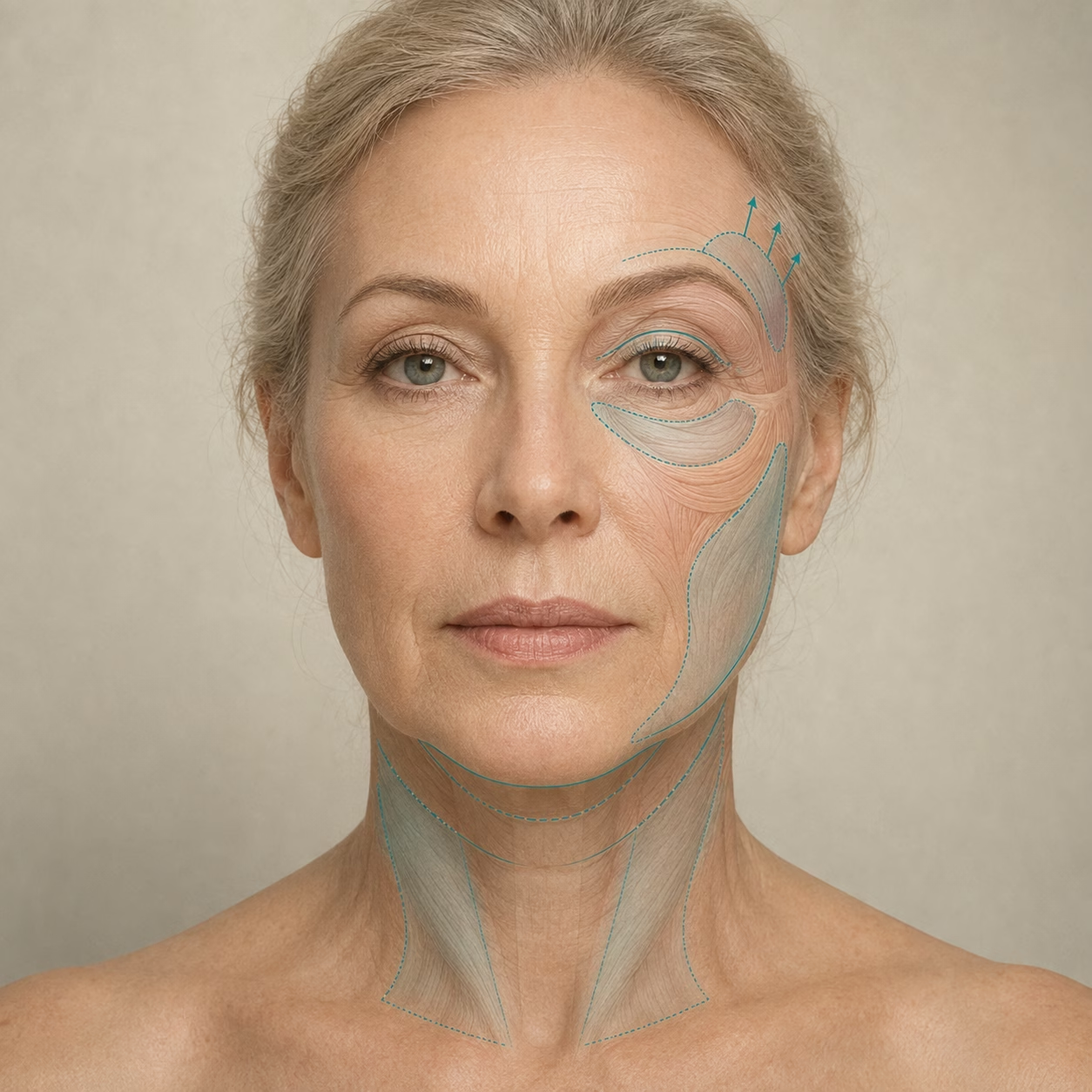
Assessing the face as a whole.
Facial concerns are assessed in relation to the surrounding structures. A change around the eyes may involve the eyelids, the brow or both; concerns in the lower face may need assessment of the neck as well.
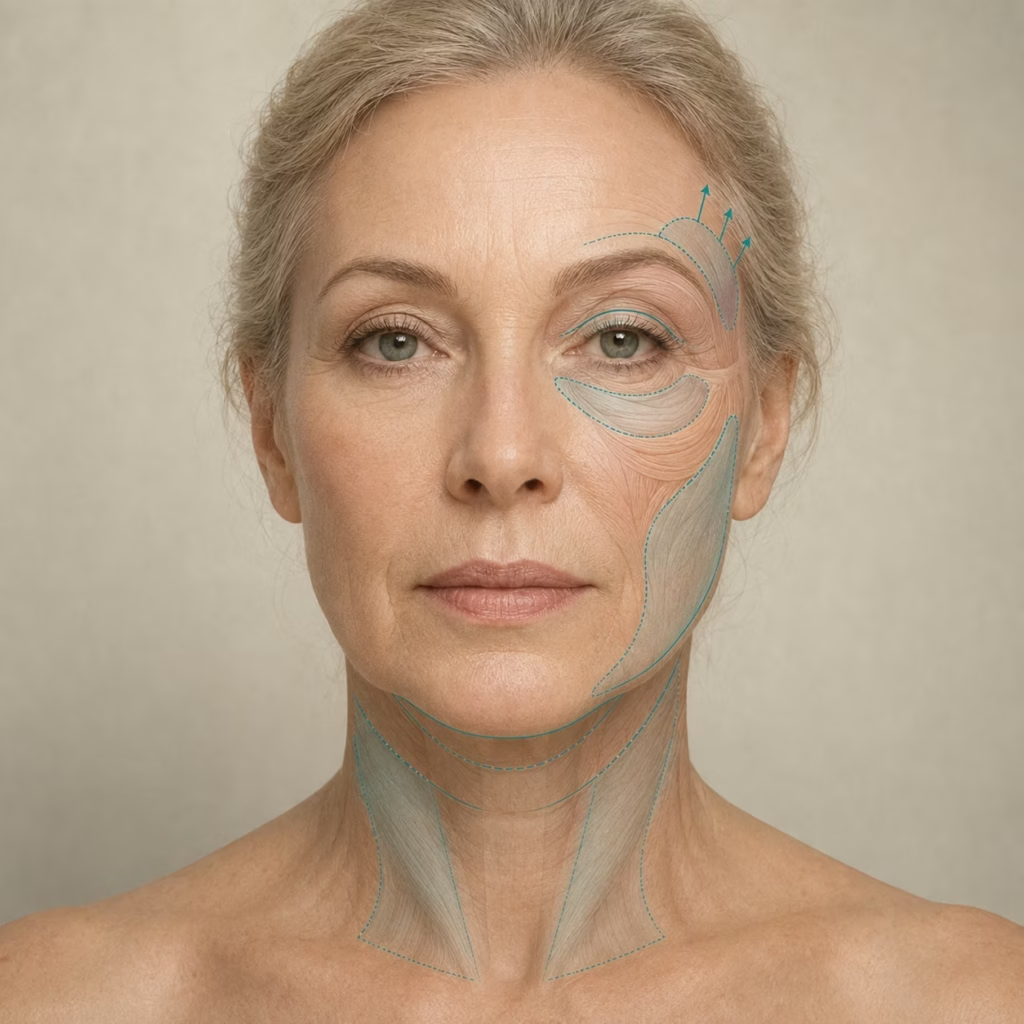
Options discussed at consultation
Upper and lower eyelid surgery
Blepharoplasty may address excess eyelid skin or selected fat-related changes. Upper and lower eyelids are evaluated separately, including whether the concern affects appearance, function or both.
Brow and temporal procedures
The position of the brow is considered alongside the eyelids. Consultation helps establish which structures contribute to your concern before a procedure is selected.
Face and neck planning
For concerns involving the cheeks, jawline and neck, explore the dedicated Deep Plane Facelift page. The scope of surgery is planned around the areas that need treatment.
Planning your procedure
Bring details of any previous facial procedures, eye problems, medications and your main concerns. Photographs can help organise a preliminary conversation, while medical assessment determines the treatment plan. Discuss the changes you want and the features you wish to preserve.
Recovery and follow-up
The aftercare plan depends on the procedure and whether areas are treated together. Ask about eye care, follow-up appointments, work and exercise before arranging your schedule. Your team should explain how to contact the clinic if recovery causes concern.
Risks and limitations
An operation cannot guarantee a particular appearance or perfect symmetry. Consultation includes scar placement, possible complications and alternatives, including whether surgery should be deferred.
Further reading: ASPS: eyelid surgery.
Plan your consultation
Share your questions and the procedure you are interested in. The clinic team can help organise the next step.