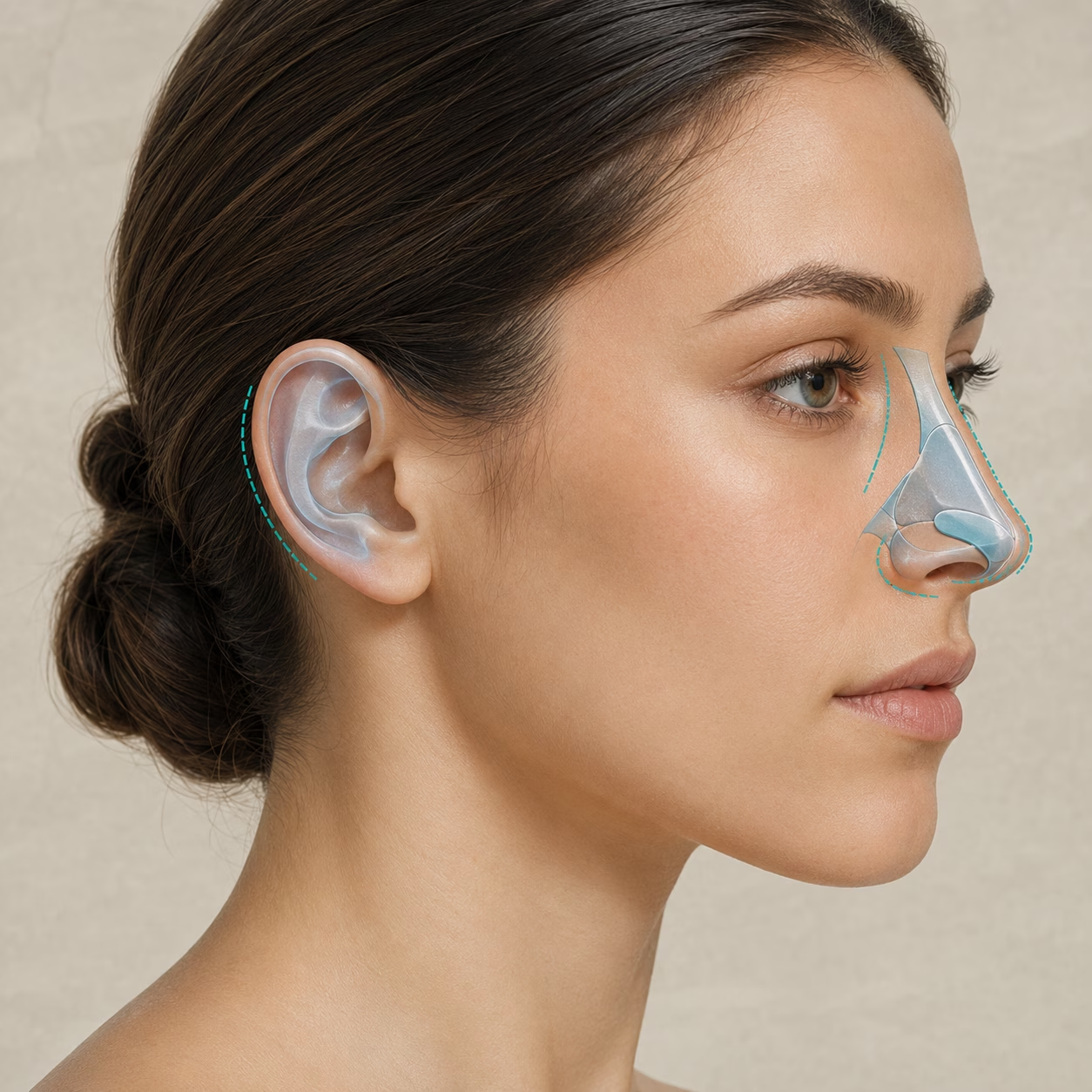
Proportion, structure and individual goals.
Nose and ear surgery begins with the specific concern and its relationship to the rest of the face. Appearance, existing asymmetry, previous treatment and relevant functional symptoms are considered during assessment.
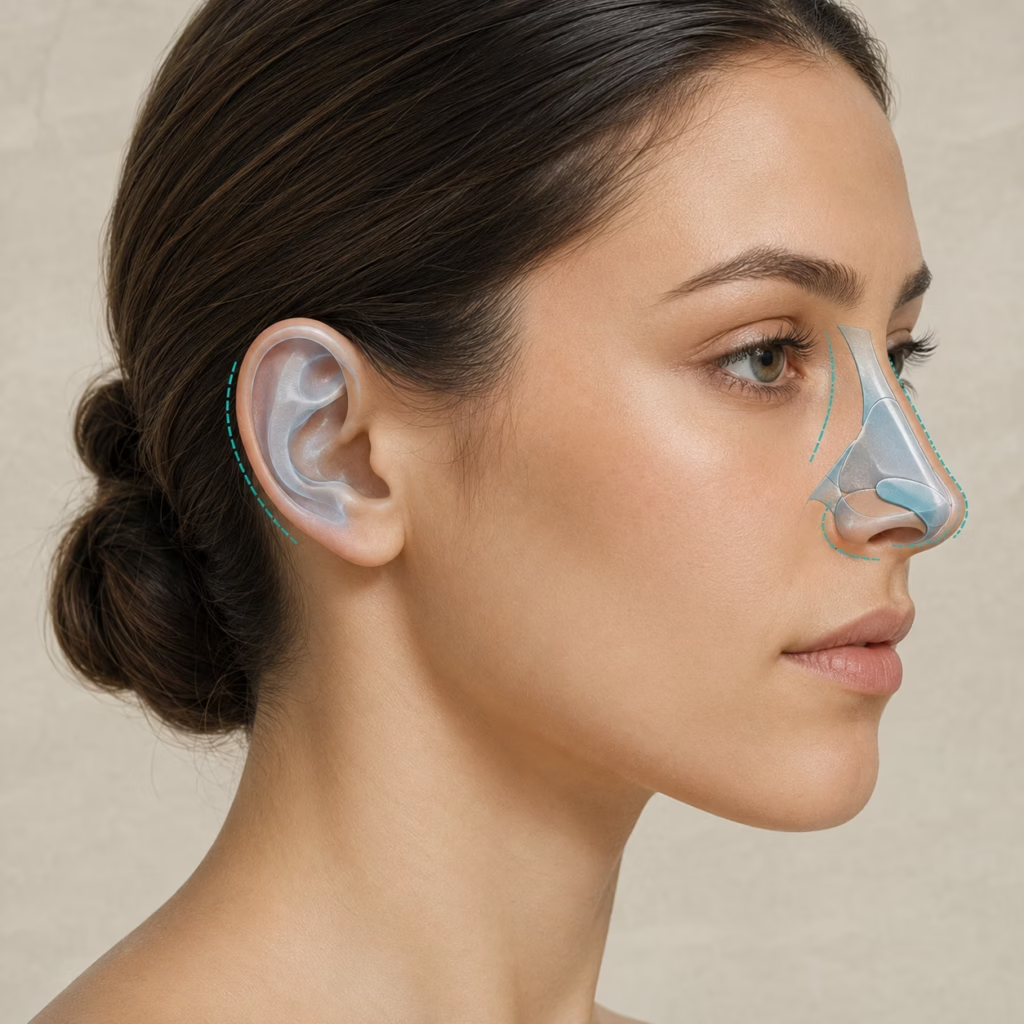
Options discussed at consultation
Rhinoplasty
Rhinoplasty changes nasal shape or proportion. Planning may consider the bridge, tip, nostrils and structural support. Breathing concerns require their own assessment; an aesthetic change alone is not a promise of improved breathing.
Otoplasty
Otoplasty can change the shape, position or proportion of the external ear. The examination considers both ears, existing differences and the specific change being discussed.
Planning your procedure
Explain what bothers you in your own words and share any history of injury, surgery or breathing problems. Reference photographs can support discussion, but they do not define a result that can be guaranteed. Your plan should reflect your anatomy and realistic expectations.
Recovery and follow-up
Ask about dressings, follow-up, returning to work and restrictions on activities before treatment. The timetable depends on the operation and your recovery. Travel arrangements should leave room for the checks your surgeon recommends.
Risks and limitations
Perfect symmetry cannot be promised. Scar position, healing, possible complications and the potential need for further treatment form part of the consultation. The decision to proceed is made after medical assessment.
Further reading: ASPS: rhinoplasty, ASPS: ear surgery.
Plan your consultation
Share your questions and the procedure you are interested in. The clinic team can help organise the next step.